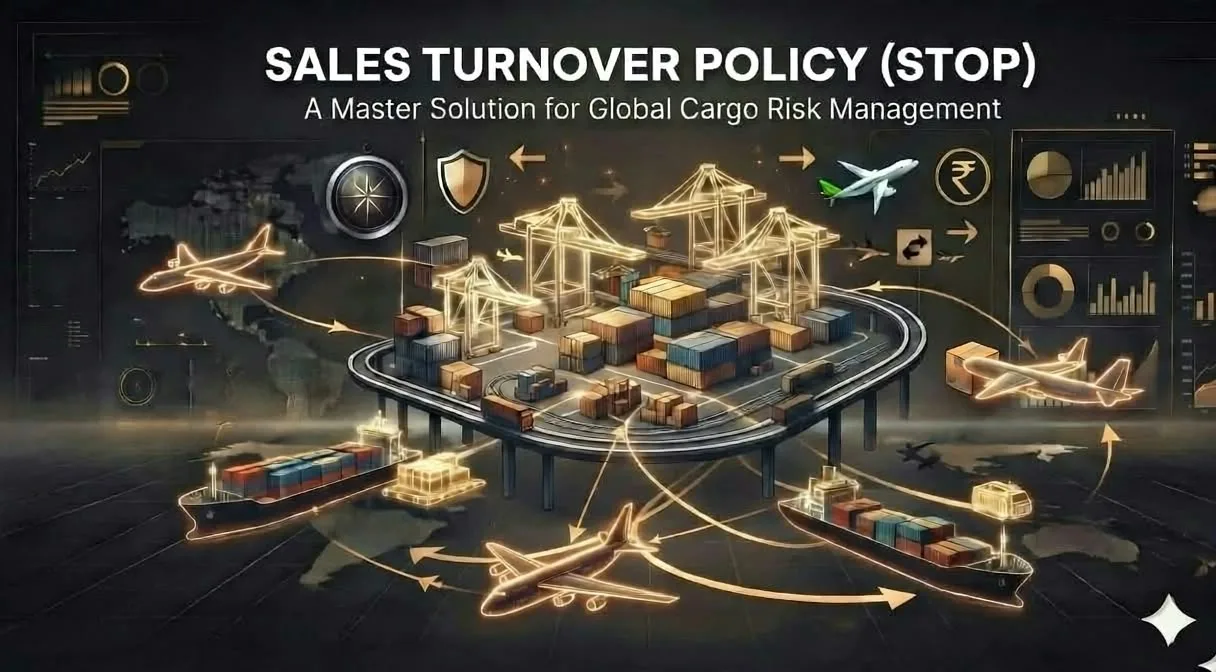
Sales Turnover Policy (STOP): One Master Policy for Every Shipment You Move
A Sales Turnover Policy (STOP) offers businesses a simpler way to protect their goods during transit under a single annual insurance arrangement. By linking coverage and premium calculations to annual turnover, it reduces repetitive shipment declarations and makes transit insurance easier to manage. Whether you are a manufacturer, trader, importer, or distributor, STOP helps streamline your insurance administration while supporting your growing business operations.
What Is a Sales Turnover Policy?
A Sales Turnover Policy (STOP) is a specialized marine cargo and transit insurance policy that protects all your incoming and outgoing goods in transit under a single annual contract.
Instead of buying separate policies or filing paperwork for every truck, container, or flight, your coverage is tied directly to your estimated annual sales or purchase turnover. One master policy protects your entire supply chain for the year.
How Does a STOP Work?
Managing a STOP eliminates daily administrative friction. Here is how the policy lifecycle works:
- Lock In Your Annual Rate: At policy inception, you and your insurer agree on an estimated annual turnover, and your premium rate is calculated against that figure.
- Ship Without Daily Declarations: Move goods freely without notifying the insurer for every dispatch. You simply submit periodic aggregate turnover figures (usually monthly or quarterly), as specified in the policy.
- Year-End Reconciliation: Once the policy year ends, your premium is adjusted against your actual turnover, ensuring you pay based on the actual business turnover declared.
Coverage Scenarios: How Does a STOP Protect Your Business?
Here are some practical examples of how a Sales Turnover Policy can support day-to-day business operations:
- Raw Material Imports: An electronics manufacturer imports microchips from overseas. Incoming shipments can be covered from the foreign port right up to the factory floor, subject to the agreed transit terms.
- Inter-Warehouse Transfers: A textile brand moves finished garments from a central factory to regional hubs by road. Eligible internal stock movements can remain covered under the policy.
- Job Work Movements: A machinery firm sends components to a third-party vendor for specialized heat treatment and brings them back. Both transit legs can be covered, subject to the policy conditions.
- Customer Returns: A consumer appliance distributor ships products nationwide. If a retailer returns damaged or defective stock, the return journey may also be covered if included in the policy scope.
- Transit-Related Storage: A shipment faces a two-day weather delay at a port warehouse. With suitable storage extensions included, the goods may remain protected during temporary warehousing.
How Can a Sales Turnover Policy Support Your Business Growth?
As a business grows, its logistics and distribution requirements become increasingly complex.
A company that initially handles a few shipments every week may eventually manage hundreds of dispatches across multiple locations. Maintaining individual shipment insurance arrangements can become increasingly demanding.
A Sales Turnover Policy provides an alternative approach by linking transit insurance administration to an agreed annual turnover.
This can help businesses:
- Manage growing shipment volumes more efficiently.
- Reduce repetitive shipment-level declaration requirements.
- Maintain a more organised approach to transit risk management.
- Align insurance arrangements with changing business operations.
- Focus more on business expansion rather than routine insurance administration.
For businesses with frequent goods movement, this approach can be worth exploring with an experienced insurance broker.
Why Are Growing Businesses Switching to a STOP?
| Key Benefit | How It Helps Your Business |
|---|---|
| Cost-Efficient | A single annual turnover-based rate may be more economical than arranging insurance for individual shipments separately. |
| Reduced Daily Paperwork | Reduces the operational burden of tracking and declaring individual invoices and vehicle details for every dispatch. |
| Continuous Coverage Management | Helps reduce the risk of shipments being overlooked during routine insurance declarations, subject to policy terms. |
| Cash-Flow Friendly | Depending on the insurer's payment options, premiums may be payable through quarterly or half-yearly instalments. |
STOP vs. Marine Open Policy: Which One Fits Your Business?
While both policies offer ongoing transit protection, their day-to-day administration can be different:
- Marine Open Policy: Generally requires declarations of individual shipments, including invoice values and relevant vehicle or voyage details, as specified by the insurer. It can suit businesses with occasional or high-value dispatches.
- Sales Turnover Policy (STOP): Uses aggregate turnover figures for premium calculation and reconciliation, reducing routine shipment-level declaration requirements. It can suit businesses with frequent, high-volume goods movements.
Is a Sales Turnover Policy Right for Your Business?
If you are a manufacturer, trader, distributor, importer, or exporter managing frequent dispatches, a STOP can simplify your transit risk management.
Instead of tracking hundreds of individual transit declarations, you can manage eligible goods movements under one annual insurance arrangement, subject to the agreed coverage, limits, exclusions, and reporting requirements.
Contact Smart Tech Insurance Brokers for Further Information
At Smart Tech Insurnace Brokers , we help businesses understand their insurance requirements and explore suitable insurance solutions.
Contact us at +91 72001 08873.
Our focus is on helping businesses identify suitable coverage, understand policy conditions, choose the right sum insured, declare all relevant locations, and make informed insurance decisions to ensure adequate protection.
Protect your business assets without complicating your insurance management. Choose the right solution with Smart Tech Insurance Brokers.