Rainy Season Car Care: Precautions to Avoid Motor Insurance Claim Rejection
The rainy season can expose your car to several risks, including flooded roads, engine damage, electrical failures, and unexpected accidents. Taking the right precautions and having suitable motor insurance coverage can help protect your vehicle and avoid unnecessary claim complications. Discover 10 essential monsoon car care tips, understand the importance of Engine Protection Add-ons, and learn how to avoid common reasons for car insurance claim rejection. Stay prepared and drive safely this m
The rainy season brings much-needed relief from the summer heat, but it also creates several challenges for car owners. Heavy rainfall, waterlogged roads, flooded streets, fallen trees, and slippery driving conditions can put vehicles at risk of serious damage.
During monsoons, even a short drive through a flooded road can result in engine damage, electrical failures, or unexpected accidents. While motor insurance provides financial protection against several unforeseen incidents, not every rain-related damage is automatically covered.
So, how can you protect your car during the rainy season and avoid unnecessary complications or rejection of insurance claims?
Let's look at 10 important precautions every car owner should follow.
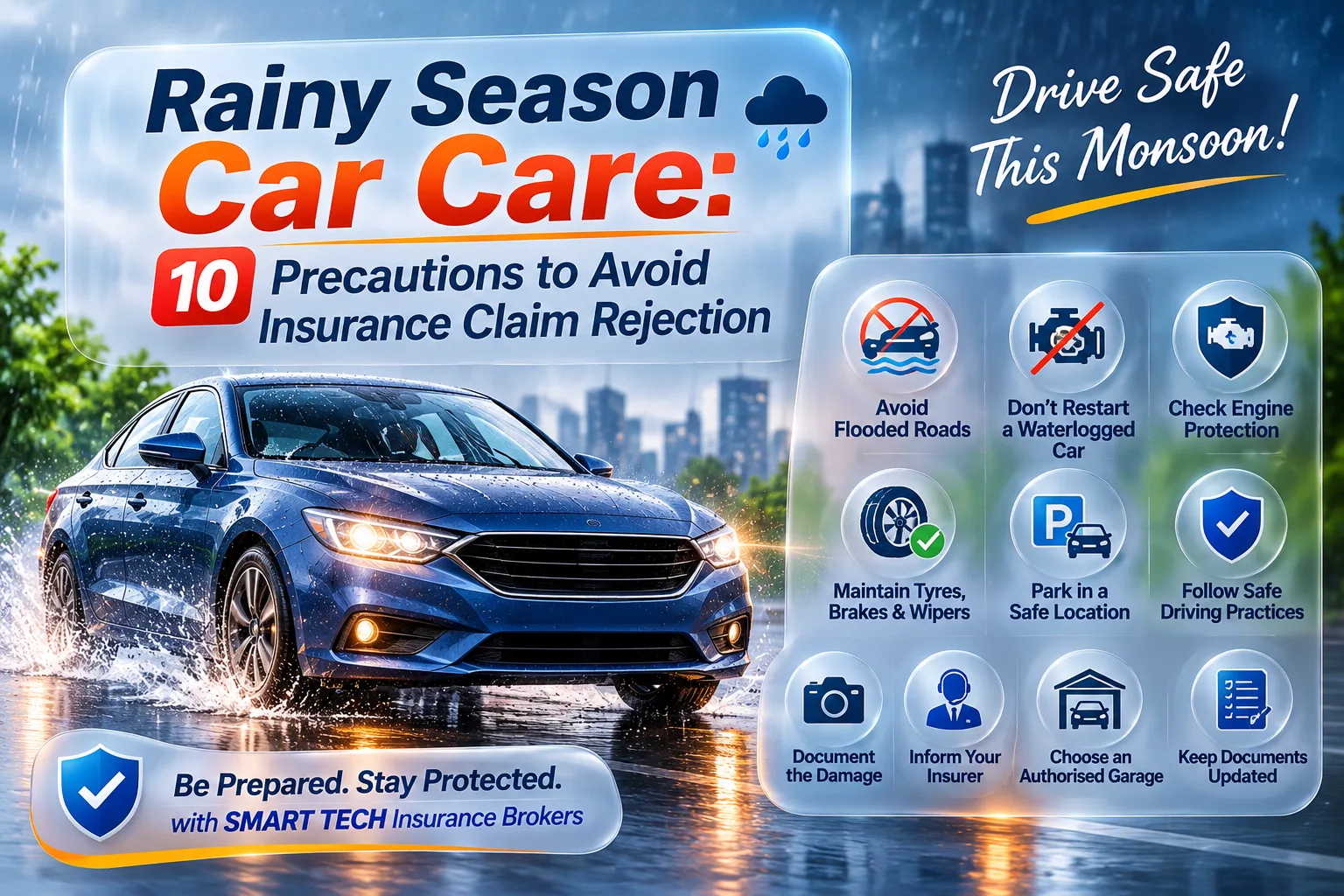
10 Important Precautions to Protect Your Car During the Rainy Season
1. Avoid Driving Through Flooded Roads
One of the most common mistakes car owners make during heavy rainfall is driving through waterlogged roads. Even if the water level appears manageable, it can enter the engine, exhaust system, or electrical components and cause severe damage.
Always avoid flooded streets, underpasses, and low-lying roads whenever possible. Remember, taking an alternative route is better than risking expensive engine repairs.
2. Never Restart a Waterlogged Car
If your car gets stuck in floodwater or the engine suddenly stops after driving through water, never attempt to restart it.
Restarting the engine when water has entered the engine compartment can cause severe internal damage, commonly known as engine hydrostatic lock or hydrolock.
Instead, switch off the ignition, move to a safe location, contact roadside assistance, and inform your insurer.
3. Check Your Engine Protection Cover
A comprehensive car insurance policy may cover certain flood-related damages. However, engine damage due to water ingress or consequential damage may not be covered under a standard policy.
This is where an Engine Protection Add-on becomes important. Depending on the insurer and policy conditions, it can provide additional protection against specified engine and gearbox damages caused by water ingress.
Always check your policy wording and consider suitable add-ons before the monsoon season begins.
4. Maintain Your Tyres, Brakes and Wipers
Wet roads reduce tyre grip and increase braking distances, making vehicles more vulnerable to accidents.
Before the rainy season, make sure your tyres have sufficient tread depth, your brakes are functioning properly, and your windshield wipers are in good condition.
Also, check your headlights, indicators, and tail lights to ensure proper visibility during heavy rainfall.
Regular vehicle maintenance helps prevent accidents and keeps your car roadworthy.
5. Park Your Car in a Safe Location
During heavy rainfall, avoid parking your car in low-lying areas, flood-prone basements, near overflowing drains, or under weak trees.
Whenever possible, choose covered parking or elevated locations to protect your vehicle from waterlogging, falling branches, and other storm-related damage.
A little care while parking can prevent significant repair expenses.
6. Follow Safe Driving Practices
Rainy roads can be dangerous due to reduced visibility, slippery surfaces, and sudden water accumulation.
Drive slowly, maintain a safe distance from other vehicles, avoid sudden braking, and never ignore road closure warnings.
Most importantly, do not take unnecessary risks by driving through flooded roads. Responsible driving helps reduce accidents and prevents avoidable vehicle damage.
7. Take Photos and Videos of the Damage
If your car gets damaged due to flooding, falling trees, or an accident, make sure to document the incident.
Take clear photographs and videos of the damaged vehicle, the surrounding area, and the circumstances of the incident, provided it is safe to do so.
These records can help support your insurance claim and assist the insurer during the claim assessment process.
8. Inform Your Insurer Before Starting Repairs
If your vehicle suffers rain-related damage, inform your insurance company as soon as possible.
Follow the insurer's claim registration and inspection procedures. Where required, allow the surveyor to inspect the vehicle before starting major repairs.
Avoid authorising extensive repairs without following the necessary claim procedures. This can help prevent unnecessary complications during claim settlement.
9. Choose an Authorised or Insurer-Approved Garage When Required
Always follow your insurer's guidelines regarding vehicle repairs.
Where applicable, choose a network garage for cashless repairs. Keep all repair estimates, invoices, towing bills, and other supporting documents safely.
Following the proper repair procedure can make the claim process smoother and more transparent.
10. Keep Your Insurance and Vehicle Documents Updated
Before the monsoon begins, ensure that your car insurance policy is active and your vehicle documents are valid.
Check your policy coverage, exclusions, deductibles, and available add-ons. Also, ensure that your driving licence and vehicle registration documents are up to date.
Understanding your policy before an unexpected incident occurs can help you make better decisions during the claim process.
What Should You Do If Your Car Gets Damaged During Heavy Rain?
Even after taking all the necessary precautions, unexpected incidents can happen.
If your car gets affected by flooding or heavy rainfall:
- Switch off the engine and never attempt to restart a waterlogged vehicle.
- Move to a safe location by towing, and contact roadside assistance.
- Inform your insurance company immediately.
- Take photographs and videos of the damage, if safe.
- Follow the insurer's instructions for inspection and repairs.
- Preserve all relevant bills, receipts, and supporting documents.
Remember, timely communication and proper documentation play an important role in the insurance claim process.
How Car Insurance Claims Are Assessed During the Rainy Season
During the rainy season, car insurance claims are assessed based on the type of damage, policy coverage, and the general condition of the vehicle. Insurers also review how the incident occurred and whether the policy terms were followed.
Understanding these assessment factors can help you avoid common reasons for car insurance claim rejection in monsoon season.
1. Policy Coverage
The claim is assessed based on what is covered under the car insurance policy. This includes any inclusions or exclusions related to monsoon-related damage.
2. Engine and Electrical Damage
If the vehicle has been driven through waterlogged roads, insurers may inspect the extent of damage to the engine and electrical systems before processing the claim.
3. Vehicle Condition Before the Incident
Insurance companies may check whether the reported damage was caused by the recent incident or if it existed earlier. Pre-existing damage is a common cause of car insurance claim denial during monsoon season.
4. Maintenance and Upkeep
Regular vehicle servicing and timely maintenance can help reduce the risk of additional damage during heavy rains and support smoother claim assessment.
5. Compliance with Policy Terms
Claims are reviewed according to the terms and conditions of the policy, including safe and appropriate vehicle usage. Driving through flooded areas against policy guidelines is a major reason why car insurance claims may get rejected in monsoon situations.
6. Timely Claim Reporting
Reporting the damage promptly allows insurers to inspect the vehicle and begin the assessment process without unnecessary delays.
7. Mechanical Damage Due to Road Conditions
Heavy rains and flooded roads can sometimes lead to mechanical stress on the vehicle. Coverage for such damage depends on the policy terms and the nature of the incident.
Stay Prepared This Monsoon, Drive with Confidence!
Rain-related vehicle damage can result in unexpected financial expenses, but taking preventive measures and choosing the right insurance coverage can make a significant difference.
At Smart Tech Insurnace Brokers we believe that protecting your vehicle starts with understanding your insurance needs. From comprehensive car insurance to suitable add-on covers such as Engine Protection and Roadside Assistance, choosing the right coverage can help you stay better prepared for unexpected situations Contact us at +91 72001 08873.
Don't wait for the first heavy rainfall to think about your car's protection. Review your motor insurance today and drive safely this monsoon!