Understanding Commercial General Liability Insurance: A Comprehensive Guide for Businesses
Commercial General Liability Insurance plays an important role in protecting businesses from unexpected third-party liability claims. Whether it involves customer injuries, accidental damage to someone else's property, or legal disputes arising from business operations, such incidents can lead to significant financial challenges. This blog explores what CGL Insurance covers, its key benefits, common exclusions, and why businesses across different industries should consider it as part of their ri
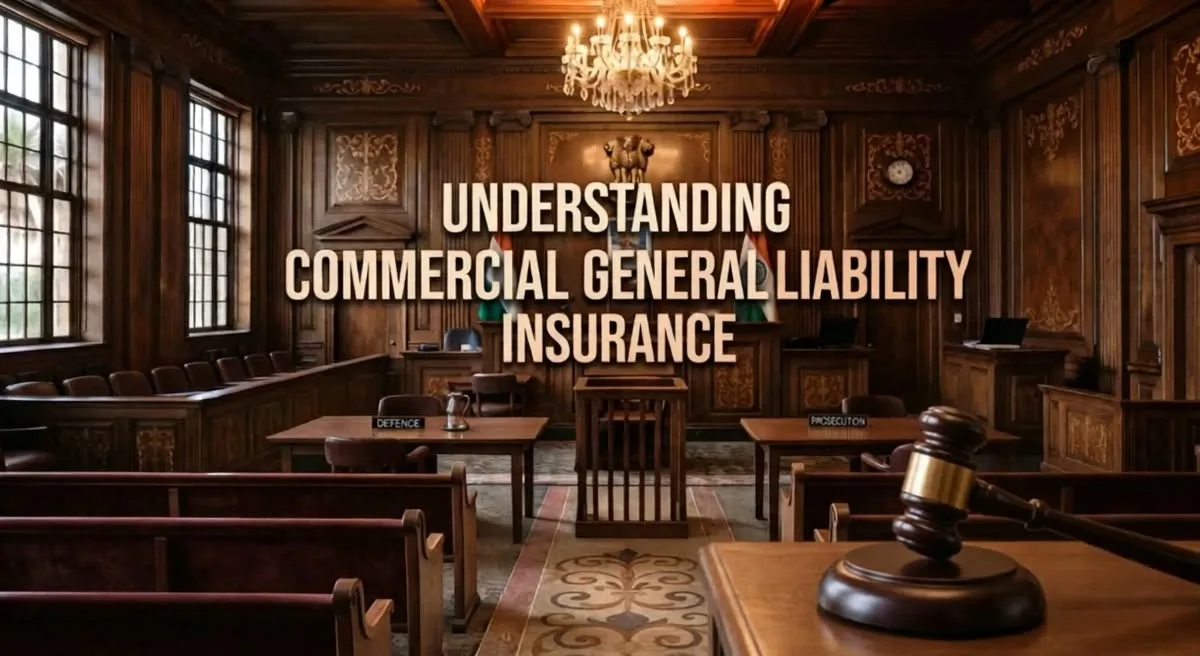
In today’s dynamic business environment, organizations face a wide range of operational risks.
Regardless of size or industry, unforeseen incidents—such as third-party bodily injury, damage to third-party property, or legal disputes—can arise during routine operations. These events can create substantial financial liabilities, legal expenses, and reputational challenges.
Commercial General Liability (CGL) Insurance helps businesses manage these exposures by providing financial protection against covered third-party claims arising from their operations, products, services, or premises. It is a foundational component of a well-structured business risk-management programme.
Do You Know About Commercial General Liability Insurance?
If not, we are here to guide you.
Commercial General Liability Insurance is a liability policy designed to protect businesses against legal liability for claims made by external parties. It typically responds to third-party bodily injury, third-party property damage, and certain personal or advertising injury claims, subject to the policy’s terms, conditions, exclusions, deductibles, and limits.
Unlike property insurance, which protects an organisation’s own physical assets, CGL insurance focuses on liabilities arising from claims brought by third parties. For example, if a customer slips and is injured at a business premises, or a contractor accidentally damages a client’s property during work, a CGL policy may provide cover for the insured’s legal liability and associated defence costs.
Why Is It Important?
Every business interacts with customers, suppliers, contractors, visitors, and the wider public. These interactions create potential liability exposures that cannot be entirely eliminated through operational controls alone.
Without adequate protection, a business may need to fund legal defence, settlements, and compensation from its own resources. CGL insurance enables organisations to transfer a significant portion of these risks to the insurer, supporting financial stability, business continuity, and stakeholder confidence.
Key Areas of Coverage
1. Third-Party Bodily Injury
A CGL policy generally covers the insured’s legal liability when a third party suffers bodily injury arising from the business’s premises, operations, or completed work. Depending on the policy, cover may include compensation awarded through legal proceedings and associated legal defence costs.
2. Third-Party Property Damage
The policy can protect a business when it becomes legally liable for accidental damage to property belonging to a third party during business operations. This may include the cost of repairing or replacing the damaged property, subject to the applicable policy conditions.
3. Personal and Advertising Injury
CGL policies may also address certain non-physical injury claims connected with marketing and communication activities. These can include allegations involving defamation, copyright infringement in advertisements, or misappropriation of advertising material, where covered under the policy wording.
4. Legal Defence Costs
Legal defence costs are one of the most valuable elements of a CGL policy. Even allegations that are ultimately unsuccessful can involve substantial legal representation, court, expert-witness, and settlement-related expenses. Subject to policy provisions, these costs may be handled or reimbursed by the insurer.
5. Common Exclusions
CGL insurance is broad, but it does not cover every business risk. Policy wordings vary, so businesses should review their specific policy carefully. Common exclusions in Indian CGL products include:
- Damage to property owned, occupied, or in the insured’s care, custody, or control.
- Injuries to employees or occupational illnesses, which are generally addressed under employees’ compensation or related cover.
- Professional negligence, errors, or omissions in professional advice or services, which may require professional indemnity insurance.
- Intentional, fraudulent, criminal, or deliberately non-compliant acts.
- Contractual liabilities assumed beyond what would apply in the absence of the contract.
- Fines, penalties, punitive, exemplary, or aggravated damages.
- Certain pollution, asbestos, war, terrorism, nuclear, and product-recall exposures, unless specifically covered.
- Pure financial losses, including loss of goodwill or market share.
Who Should Consider CGL Insurance?
Commercial General Liability Insurance is relevant to organizations across virtually every sector, particularly those that interact with the public, operate physical premises, employ contractors, manufacture or supply products, or provide services at client locations.
Typical businesses that benefit from CGL cover include:
- Manufacturers and distributors
- Construction, engineering, and infrastructure firms
- Retailers, wholesalers, and e-commerce businesses
- Hotels, restaurants, and hospitality providers
- Healthcare and wellness organizations
- Educational institutions
- Technology and IT services companies
- Professional service firms
- Small and medium enterprises (SMEs)
In many commercial arrangements, clients, vendors, landlords, and project owners also require businesses to maintain adequate liability insurance before work begins.
Is Your Business Adequately Protected?
Many business owners believe that liability claims are rare or only affect large corporations. However, the reality is that businesses of all sizes are exposed to risks every day. A simple accident, an unexpected property damage incident, or a legal allegation can result in significant financial consequences.
Take a moment to ask yourself:
- Does your business interact with customers, suppliers, or members of the public?
- Do employees visit client locations or work at third-party premises?
- Could an unexpected incident lead to legal action against your business?
- Would your business be financially prepared to handle legal defence costs and compensation claims?
If your answer is "Yes" to any of these questions, Commercial General Liability Insurance should be an essential part of your business risk management strategy.
Beyond Insurance: A Risk Management Perspective
Commercial General Liability Insurance should not be viewed as merely a policy purchased to satisfy contractual requirements. Instead, it should form part of a broader enterprise risk management framework.
Businesses can further reduce their exposure by:
- Implementing workplace safety procedures.
- Conducting regular risk assessments.
- Maintaining proper documentation and incident reporting.
- Providing employee safety and compliance training.
- Reviewing liability exposures periodically as the business grows.
Insurance acts as the financial safeguard when preventive measures alone are not enough.
Every Business Has a Story—Make Sure Yours Doesn't End with a Lawsuit
Businesses are built on trust, hard work, and years of dedication. But sometimes, a single unforeseen incident can interrupt that journey. Whether it's an accidental injury on your premises or damage caused during business operations, liability claims can arise when you least expect them.
Commercial General Liability Insurance is not just about paying claims—it's about ensuring that one unexpected event doesn't derail years of business growth.
Think Like a Risk Manager
Successful businesses don't wait for problems to occur—they prepare for them.
Before considering any insurance solution, ask yourself:
- What happens if a customer gets injured at my premises?
- Could my daily operations accidentally damage someone else's property?
- If a legal notice arrives tomorrow, does my business have the financial capacity to defend itself?
- Am I protecting only my assets, or also my reputation?
The answers to these questions often reveal why liability insurance is considered an essential component of modern business risk management.
Did You Know?
Many business owners assume that liability claims only affect large corporations. In reality, small and medium-sized businesses are often more financially vulnerable because they may not have the resources to absorb unexpected legal expenses or compensation costs.
A single liability claim can involve investigation costs, legal representation, court proceedings, settlement negotiations, and compensation—all of which can place significant pressure on a business if adequate insurance protection is not in place.
Commercial General Liability Insurance: More Than Just a Policy
A Commercial General Liability policy is more than a contractual document—it represents confidence.
It allows businesses to interact with customers, suppliers, vendors, and the public knowing that, if an unforeseen third-party liability arises, there is a structured financial mechanism to support the business.
Rather than viewing insurance as an expense, many successful organizations consider it an investment in business continuity and operational resilience.
A Simple Way to Understand CGL
Think of Commercial General Liability Insurance as a protective shield surrounding your business operations.
While you focus on serving customers, expanding your business, and building your brand, the policy helps safeguard your organization against unexpected third-party liability claims that could otherwise have significant financial consequences.
It doesn't prevent accidents—but it helps ensure that an accident doesn't become a financial crisis.
Before Purchasing a CGL Policy, Ask These Questions
Not every business has the same level of liability exposure. Before selecting a policy, consider the following:
- Does the policy adequately reflect the scale of my business?
- Is the Sum Insured sufficient for potential liability exposures?
- What types of claims are covered—and what exclusions should I be aware of?
- Does the insurer have an efficient claims handling process?
- Are there optional extensions available that better suit my industry?
Asking the right questions today can help avoid unexpected surprises tomorrow.
Risk Never Takes an Appointment
One of the realities of business is that risks rarely arrive with prior notice.
A routine client visit, a service call, a product demonstration, or even a simple advertisement can unexpectedly lead to legal liability. Businesses cannot predict every risk—but they can certainly prepare for it.
That preparation begins with understanding liability exposure and ensuring that appropriate insurance protection is in place.
Building Business Confidence Through Protection
Every successful business invests in growth, innovation, customer relationships, and operational excellence. Equally important is investing in protection.
Commercial General Liability Insurance enables organizations to operate with greater confidence by reducing the financial uncertainty associated with third-party liability claims. When businesses know they are protected, they can focus their energy where it matters most—serving customers and achieving sustainable growth.
Benefits for Businesses
A well-structured CGL policy can provide several strategic advantages:
- Financial protection against third-party liability claims.
- Support for legal defence expenses and settlement costs.
- Protection against unexpected operational risks.
- Enhanced credibility with clients, investors, and business partners.
- Greater ability to meet contractual and tender requirements.
- Improved confidence in managing day-to-day operations.
- Stronger long-term business continuity and risk management.
A Strategic Risk-Management Investment
Commercial General Liability Insurance is more than a compliance requirement—it is a cornerstone of an organization's risk-management strategy. By protecting against covered third-party claims arising from business operations, CGL insurance helps organizations manage legal liabilities without compromising financial stability.
As businesses operate in increasingly complex and regulated environments, maintaining appropriate liability cover is a prudent financial decision and a strategic investment in operational resilience and long-term success.
Disclaimer: Businesses should review the policy wording and seek professional advice before purchasing cover.
Contact Smart Tech Insurance Brokers Now For Further Information
At Smart Tech Insurnace Brokers we help businesses understand their insurance requirements and explore suitable insurance solutions. Contact us at +91 72001 08873.
Our focus is on helping businesses identify suitable coverage, understand policy conditions, and make informed insurance decisions, choosing the right sum insured, declaring all locations, and helping businesses understand the policy conditions to ensure adequate protection.
Protect your business assets without complicating your insurance management. Choose the right solution with Smart Tech Insurance Brokers.