Surety Bond Insurance: What It Is, Why It Matters, and How It Works?
Know the importance of surety bonds, their key benefits, and how Bid Bonds and Performance Bonds support contractors at different stages of a project. Learn how suitable bonding solutions may help improve financial flexibility, manage working capital, and provide assurance to project owners. Explore how we can help you understand available options and identify suitable surety bond solutions based on your business needs and project requirements.
What Is Surety Bond Insurance?
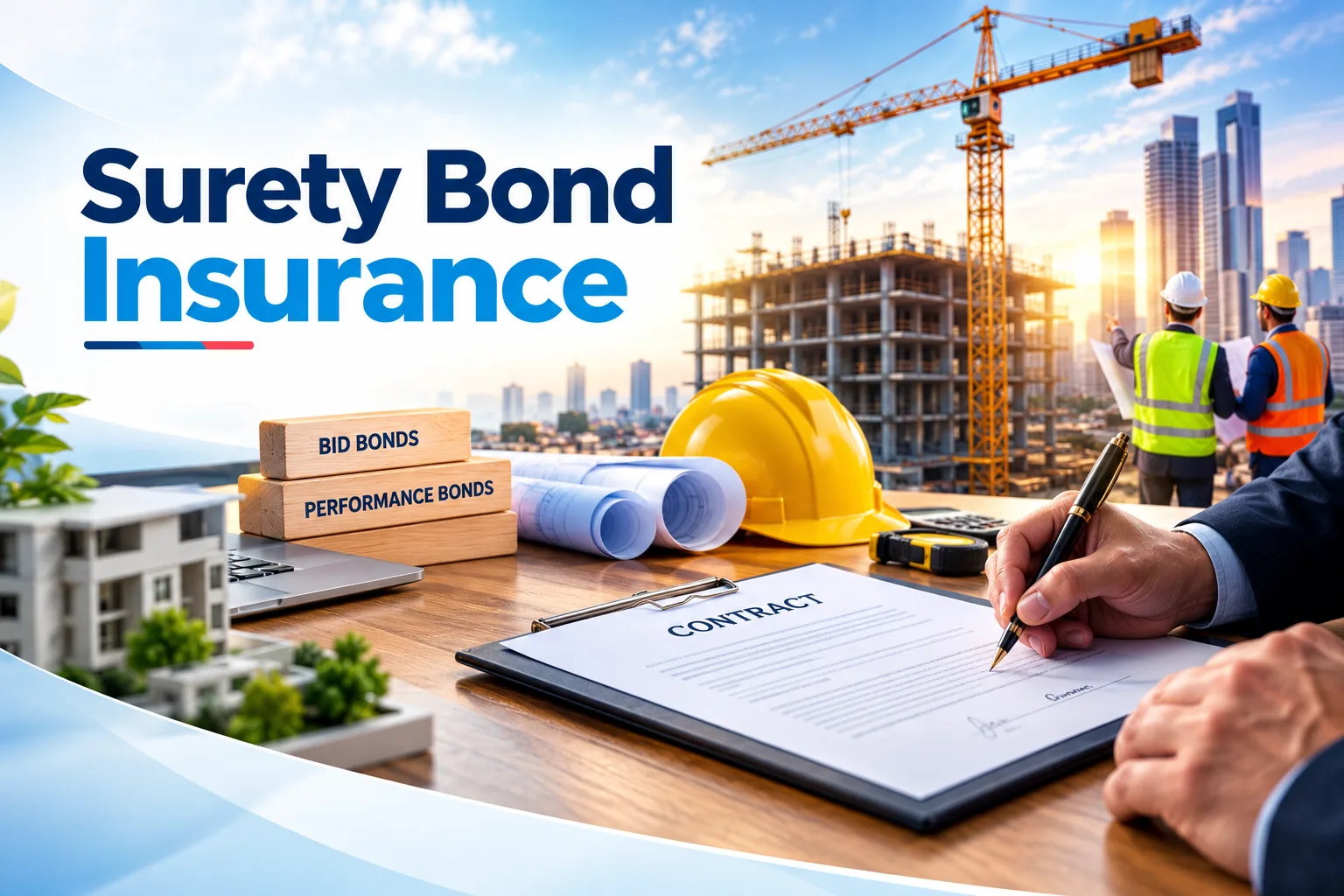
Surety Bond insurance is a financial risk management solution that helps contractors meet specific contractual and tender requirements when participating in government tenders and other eligible projects. It provides financial assurance to project owners and contracting authorities that contractors will fulfil their stated obligations, subject to the bond's terms and conditions.
In many construction and infrastructure projects, contractors are required to provide financial security before they can participate in a tender or begin executing a contract. Traditionally, bank guarantees have been widely used for this purpose. However, depending on the project requirements and the products available, contractors may be able to use Bid Bonds and Performance Bonds as alternatives to traditional bank guarantees.
These bonds provide assurance to project owners that contractors will meet specified tender or contractual commitments, subject to the bond terms and conditions, while also offering cost savings where the bond structure and pricing make it more economical.
Bond solutions can be particularly relevant for contractors involved in government construction projects, infrastructure development, engineering works, and other contracts where financial security is a mandatory requirement.
Why Is Surety Bond Insurance Useful?
Contractors participating in government tenders often need to demonstrate their financial credibility and ability to fulfil contractual obligations. Providing the required financial security is an important part of this process. However, relying exclusively on traditional bank guarantees can sometimes create financial challenges for businesses.
Bank guarantees may require collateral, consume banking limits, or restrict working capital, depending on the bank's terms and the contractor's financial arrangements. These requirements can make it more difficult for contractors to manage multiple projects simultaneously or invest in business expansion.
Suitable bond insurance solutions can help contractors manage these requirements more efficiently. Depending on the product structure, they may help preserve liquidity, reduce dependence on collateral-backed banking facilities, and provide a cost-effective option for meeting contractual security requirements.
The potential benefits include:
- Cost Savings: Depending on the premium, fees, collateral requirements, and other terms, a bond may offer a more economical solution than a traditional bank guarantee.
- Improved Cash Flow: Suitable bond structures may help contractors retain access to funds for salaries, materials, equipment, and other project expenses.
- Business Growth Opportunities: Access to appropriate bonding solutions may help eligible contractors pursue additional tenders and undertake multiple projects.
- Greater Financial Flexibility: Contractors can explore alternatives to conventional guarantees based on their business needs and project requirements.
- Confidence for Project Owners: Bonds provide financial assurance to beneficiaries in accordance with the agreed bond wording.
The suitability and cost benefits of a bond depend on the provider's assessment, the project requirements, the bond amount, and the applicable terms and conditions. Contractors should compare the total cost and obligations before selecting a solution.
How Does Surety Bond Insurance Work?
The process of obtaining a bond generally involves the following steps:
1. Identify Contract Requirements
The first step is to review the tender documents or project agreement carefully. Contractors should identify the required bond type, amount, validity period, beneficiary, and any specific conditions imposed by the contracting authority.
Understanding these requirements helps ensure that the selected bond is appropriate for the project.
2. Apply for the Appropriate Bond
Once the requirements are clear, the contractor can approach an eligible provider or insurance broker to explore suitable options. The application may require business registration details, financial statements, project information, tender documents, and other supporting records.
The provider evaluates the contractor's financial position, experience, project obligations, and other relevant factors before deciding whether to issue the bond.
3. Obtain the Bond
If the application is approved, the bond is issued according to the agreed terms and conditions. The contractor must then submit the bond to the project owner or contracting authority in the required format and within the specified deadline.
Before submission, the contractor should verify the bond amount, validity, beneficiary details, and wording to ensure compliance with the tender requirements.
4. Fulfil Contractual Obligations
After the bond is accepted, the contractor must fulfil the relevant tender or contractual commitments. For example, a successful bidder may need to proceed with the contract and provide the required performance security.
If a default covered by the bond occurs, the beneficiary may submit a claim in accordance with the bond wording and applicable requirements. Any liability, payment, or subsequent recovery will depend on the specific bond terms and the applicable arrangements.
What We Offer
At SMART TECH we help contractors explore suitable Surety bond solutions based on their contractual obligations and project requirements. Two common types of Surety Bonds are Bid Bonds and Performance Bonds.
1. Bid Bond
A Bid Bond provides assurance to the project owner that a bidder will honour specified tender commitments. It is generally associated with the bidding stage of a project.
For example, when a contractor participates in a government construction tender, the tender authority may require a Bid Bond to demonstrate the bidder's commitment to the process. If the bidder is selected, the bond may address specified failures, such as refusing to proceed with the contract or failing to provide the required security, depending on the bond wording.
A Bid Bond can therefore help project owners manage certain risks associated with the tender process while allowing eligible contractors to meet bidding requirements.
2. Performance Bond
A Performance Bond provides financial protection to the beneficiary against specified contractual non-performance, subject to the bond terms and conditions. It is generally associated with the execution of a contract after it has been awarded.
For example, a contractor undertaking a government infrastructure project may be required to provide a Performance Bond to assure the project owner that the agreed contractual obligations will be met.
If a covered default occurs, the beneficiary may make a claim in accordance with the bond wording. This provides a mechanism for financial protection against specified risks and helps support confidence in the contractor's contractual commitments.
Both Bid Bonds and Performance Bonds serve different purposes. The appropriate option depends on the project stage, tender conditions, and the type of security required by the beneficiary.
Secure Your Projects with SMART TECH
Meeting tender requirements and securing government contracts can be challenging, particularly when contractors must balance financial commitments, project expenses, and business expansion plans. Choosing a suitable bond solution can help make this process more manageable.
At SMART TECH INSURANCE , we help contractors explore appropriate Surety bond options for eligible Central government, State government and PSU contracts and other projects.
Explore suitable bonding options, understand the associated costs, and take the next step towards pursuing new project opportunities.
Contact SMART TECH today at +91 7014987001 to learn more about Bid Bonds and Performance Bonds.
Note: Bond availability, eligibility, pricing, coverage, and claim conditions depend on the provider, project requirements, and applicable bond terms and conditions.